Gas wells, wellheads and valve stations often contain many valves, flanges, seals and pipe connections that operate continuously under pressure.
For remote or unmanned sites, traditional manual inspections may only be carried out periodically. A small leak can therefore develop between inspections without being noticed immediately.
Acoustic monitoring provides another way to continuously monitor these assets.
When pressurized gas escapes through a small opening, it creates turbulent flow and generates characteristic acoustic signals. By continuously monitoring these signals, an acoustic leak detection system can identify abnormal events and provide an early warning.
How Acoustic Gas Leak Detection Works
The HERTZINNO HZ-WL-15A Gas Well Leak Monitoring System uses MEMS acoustic sensors to continuously listen to equipment such as:
- wellhead valves;
- Christmas trees;
- flanges;
- pressure regulators;
- seals and packing glands;
- instrument connections;
- small-bore pipelines.
The system uses a 9-MEMS acoustic sensor array with a monitoring frequency range of 20 Hz to 80 kHz, covering both audible and ultrasonic acoustic information.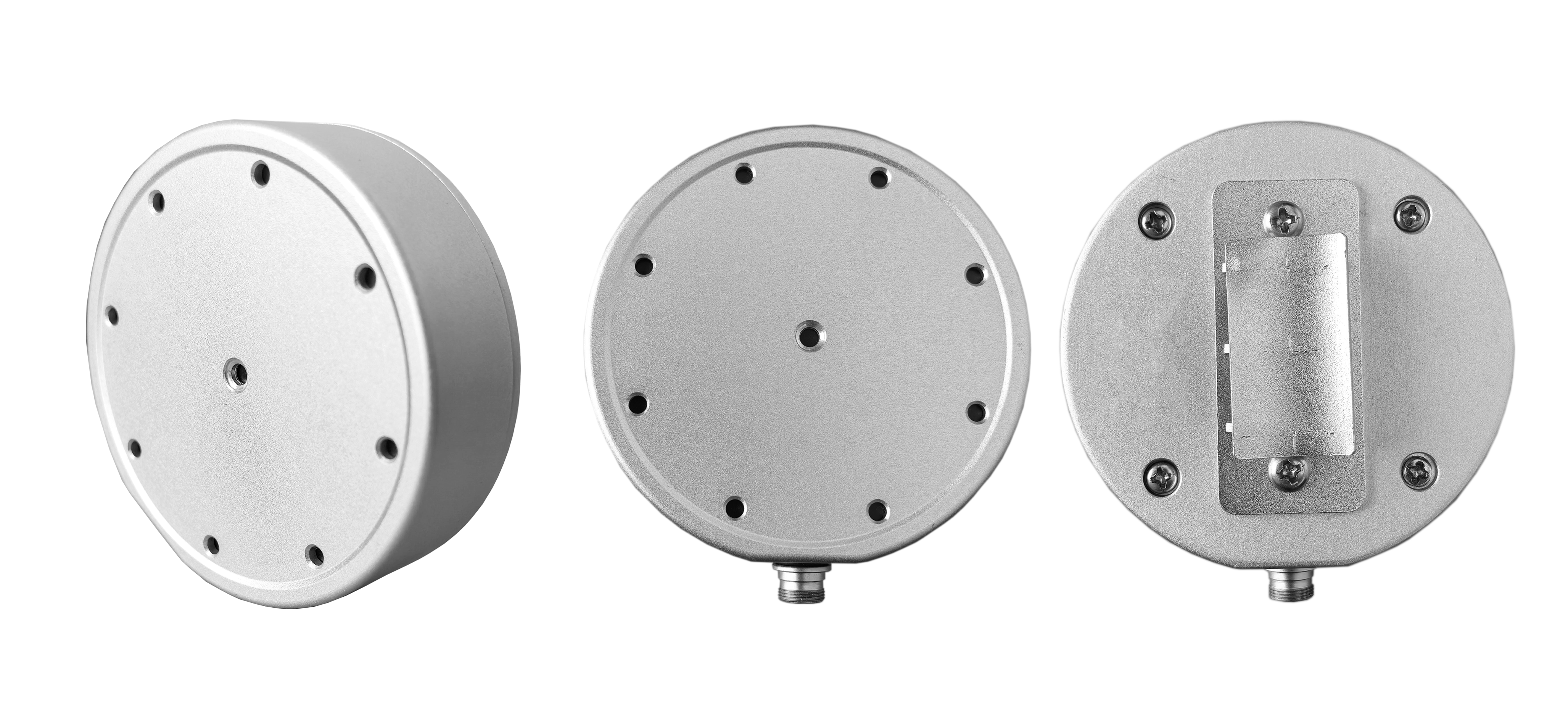
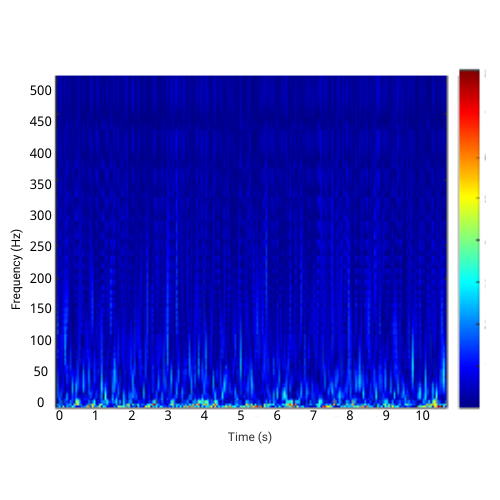
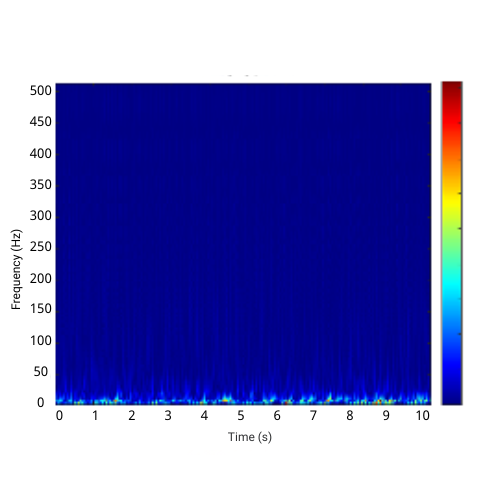
Instead of simply measuring whether a sound becomes louder, the system analyzes the acoustic characteristics of the signal.
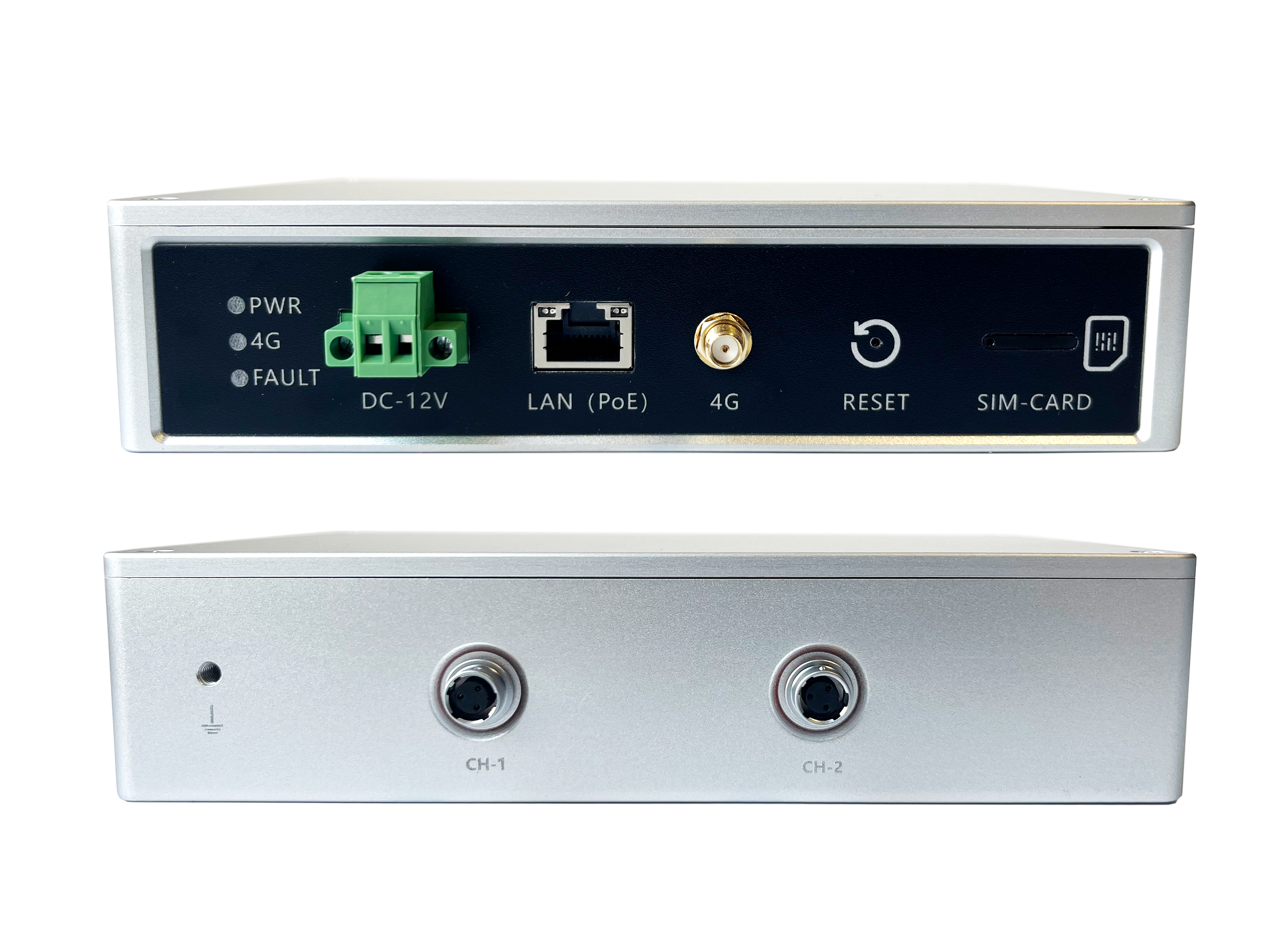
The basic process is:
Acoustic Signal Collection
↓
Background Noise Filtering
↓
Frequency & Time-Frequency Analysis
↓
Leak Acoustic Feature Recognition
↓
Alarm Generation
This helps the system distinguish potential gas leaks from common background noise such as wind, vehicles and equipment operation.
Edge AI for Remote Gas Wells
One of the main challenges at remote gas wells is communication.
Instead of continuously sending large amounts of raw acoustic data to the cloud, HZ-WL-15A performs leak analysis directly at the edge.
This means the device can continue monitoring even if the network is temporarily unavailable.
When an abnormal acoustic event is detected, the system can send information such as:
- site ID;
- device status;
- alarm level;
- event time;
- event duration.
This makes the solution suitable for remote and unmanned gas production sites.
Typical System Deployment
A standard monitoring point can use:
1 × HZ-WL-15A Edge Analysis Unit
2 × Acoustic Sensor Arrays
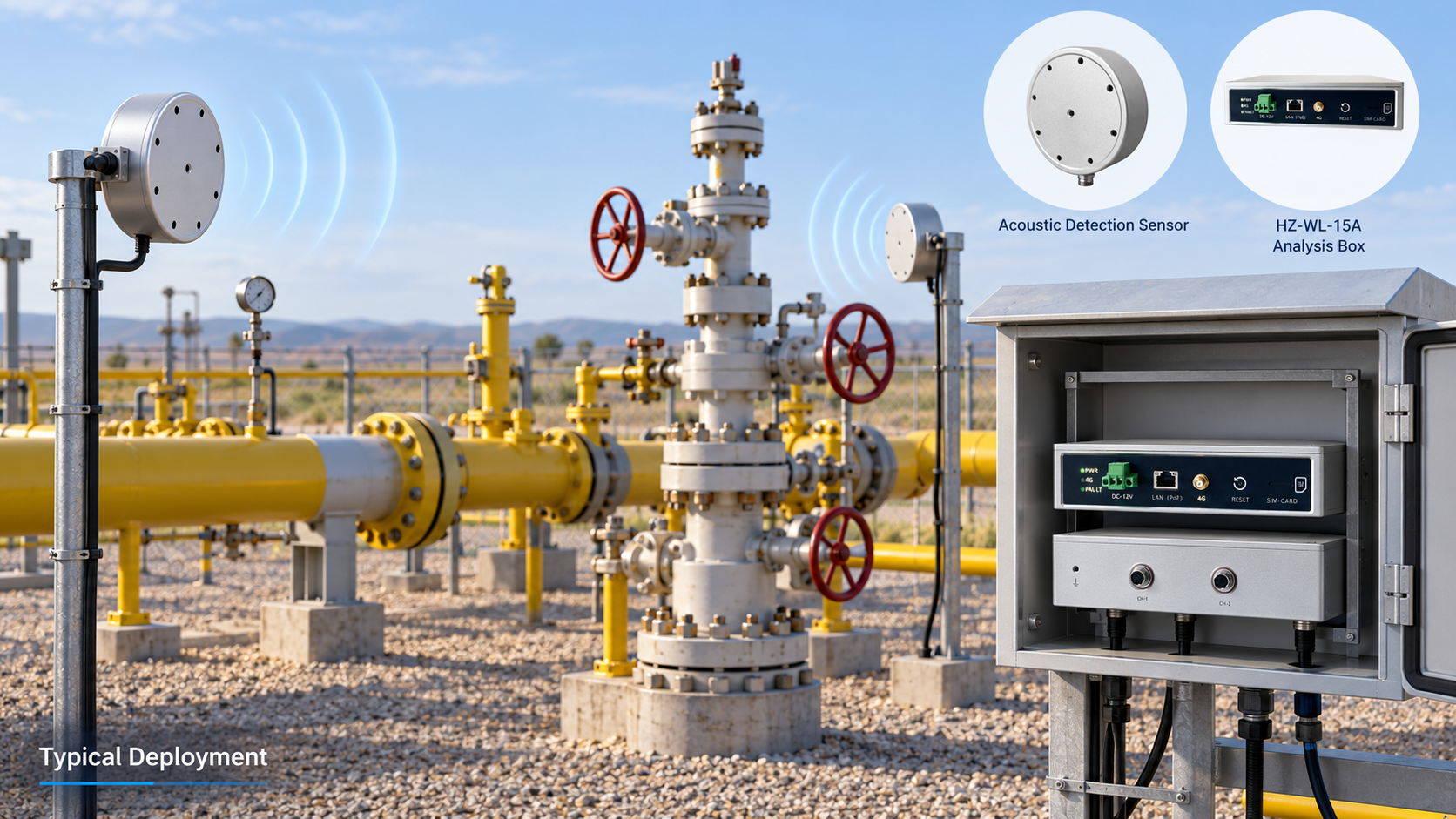
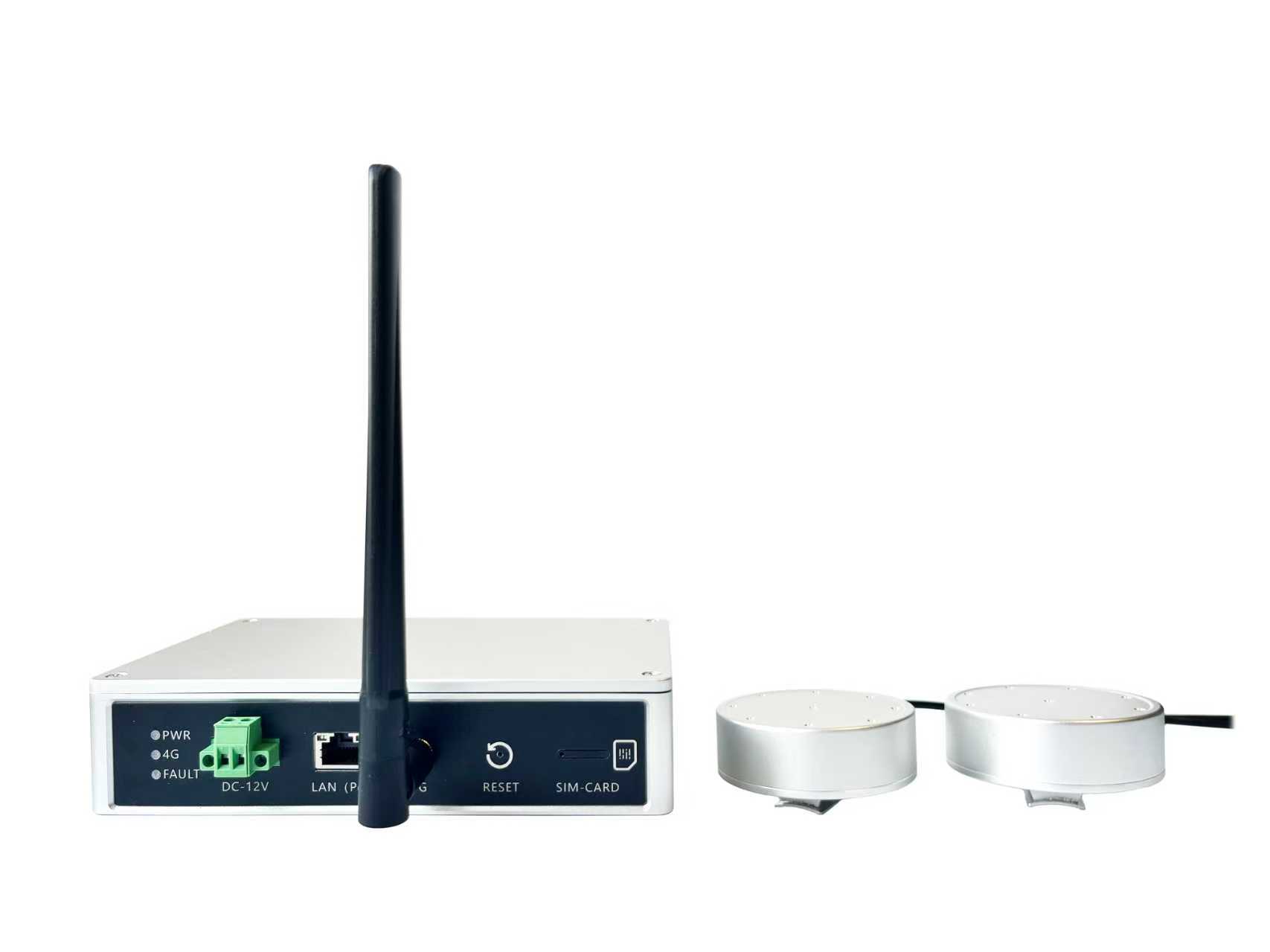 The two acoustic sensors can be installed around a wellhead or valve group to monitor multiple potential leak points at the same time.
A typical architecture is:
Gas Well / Valve Station
↓
Acoustic Sensors
↓
HZ-WL-15A Edge AI
↓
4G / Ethernet
↓
SCADA / IoT Platform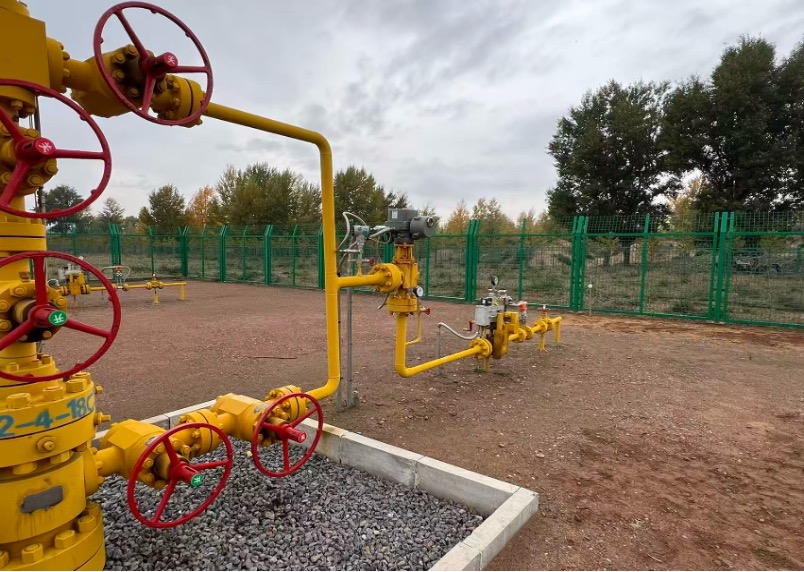
The system supports 4G and Ethernet communication and can connect with industrial platforms through protocols including HTTP, Modbus TCP and WebSocket.
Typical Applications
Acoustic gas leak monitoring can be used for:
- remote gas wells;
- wellheads;
- natural gas valve stations;
- gathering stations;
- metering stations;
- compressor stations;
- pipeline valve rooms;
- gas processing facilities.
Acoustic Monitoring as an Early-Warning Layer
Acoustic monitoring does not need to replace conventional gas detectors.
Instead, it can work together with:
Acoustic Monitoring
Continuous leak-event detection
Fixed Gas Detectors
Gas concentration monitoring
Portable Acoustic Cameras or Methane Detectors
Leak confirmation and localization
SCADA / IoT Platforms
Centralized alarm management
For remote natural gas assets, this creates a more complete monitoring strategy.
From Periodic Inspection to Continuous Monitoring
The main advantage of permanent acoustic monitoring is simple:
Traditional approach:
Periodic inspection → Search for leaks → Repair
With acoustic monitoring:
24/7 monitoring → Abnormal event detected → Remote alarm → Targeted inspection → Repair
For operators managing many remote gas wells and valve stations, this can make maintenance more focused and improve response to abnormal events.
HERTZINNO HZ-WL-15A
The HZ-WL-15A is designed for continuous acoustic monitoring of gas wells and other high-pressure natural gas equipment.
Its key capabilities include:
24/7 Acoustic Monitoring
20 Hz–80 kHz Wideband Detection
Edge AI Analysis
4G / Ethernet Connectivity
SCADA and IoT Integration
For pilot projects or multi-site gas leak monitoring applications, HERTZINNO can support sensor placement, system configuration and platform integration.
Contact HERTZINNO to discuss your gas well or valve station monitoring project.


 The two acoustic sensors can be installed around a wellhead or valve group to monitor multiple potential leak points at the same time.


